Cold Plunge Training: The Science of Movement Beyond Stillness and Breathwork


Ideation and understanding: Monaya MaGaurn
Written by: OpenAI
Cold Plunge Training: Why Stillness and Breathing Aren’t the Whole Answer: with a side of science.
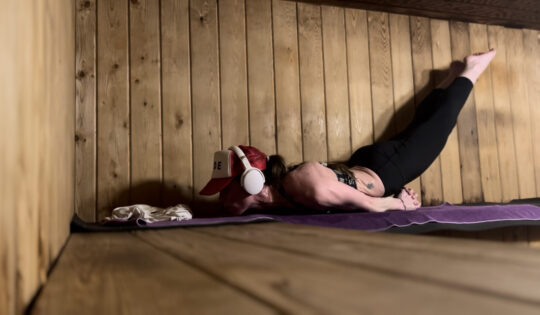
Cold plunge training has earned a reputation as a tool for resilience, recovery, and overall health. The mainstream approach is often framed around sitting still in icy water and using controlled breathing to endure the shock. While these practices do activate powerful mechanisms, they only scratch the surface of what the body can do. From a physiological perspective, stillness and breathing are not the complete answer. The real training stimulus comes from movement in the cold — a stressor that challenges the body on multiple levels simultaneously.
Stillness and Its Limits
When you sit motionless in a cold plunge, your body’s initial reaction is vasoconstriction: blood vessels narrow to preserve core temperature by reducing blood flow to the skin and extremities. This is coupled with a spike in norepinephrine, which sharpens focus and increases alertness. Over time, repeated exposure trains your nervous system to tolerate the shock, while your body may increase brown adipose tissue (BAT) activity, improving metabolic heat production.
However, this adaptation happens in a controlled environment. With no muscular activity, heat production is minimal. The cardiovascular system is challenged less than it would be during exertion, and the musculoskeletal system remains passive. You are training tolerance, not performance.
Breathing as a Regulatory Tool
Breathwork during cold immersion works by manipulating the autonomic nervous system. Slow, deep breathing counteracts the sympathetic “fight-or-flight” surge, lowering heart rate and reducing perceived stress. This is useful for preventing panic and building composure, but it does not replicate the realities of physical exertion in the cold.
In real movement scenarios, breathing is rarely slow or rhythmic. Sprinting through snow or swimming in frigid water forces rapid, irregular breathing. Muscles demand oxygen faster than calm breath cycles can provide. If your cold tolerance depends solely on controlled breathing, you may falter when breath becomes chaotic.
The Science of Movement in the Cold
When you add movement into the equation, the stress response multiplies:
-
Metabolic Heat Production: Muscles generate heat through shivering and voluntary movement, creating thermogenesis that differs from passive adaptation. This dynamic training forces the body to balance heat production with rapid heat loss to the environment.
-
Cardiovascular Load: Cold water and cold air both increase blood pressure and heart rate. Adding physical exertion amplifies demand on the cardiovascular system, improving circulation efficiency under stress.
-
Neuromuscular Coordination: Cold impairs nerve conduction velocity and muscle contractility. Training movement in the cold forces the nervous system to adapt, preserving coordination and strength despite slowed signals.
-
Energy Utilization: Exercising in the cold accelerates glycogen use while also enhancing fat oxidation. Over time, this improves metabolic flexibility — the ability to switch efficiently between fuel sources.
These adaptations cannot be fully developed through stillness. Movement builds not only tolerance but capability: the ability to perform in cold environments rather than just survive them.
Beyond What Most Can Do
Most people gravitate toward stillness and breath because they are accessible, safe entry points. But the next level of adaptation — dynamic cold training — is beyond what most attempt. It requires conditioning, preparation, and respect for the risks. Yet, it is here where the human body’s adaptability shines. By layering movement on top of cold stress, you don’t just train your mind to stay calm — you train your entire physiology to thrive in hostile environments.