Crystals and Lifestyle Physics: Light, Matter, and Meaning
INTENTIONALLY ENLARGED FOR METAPHYSICAL SENSORY INPUT. PLEASE ENJOY!
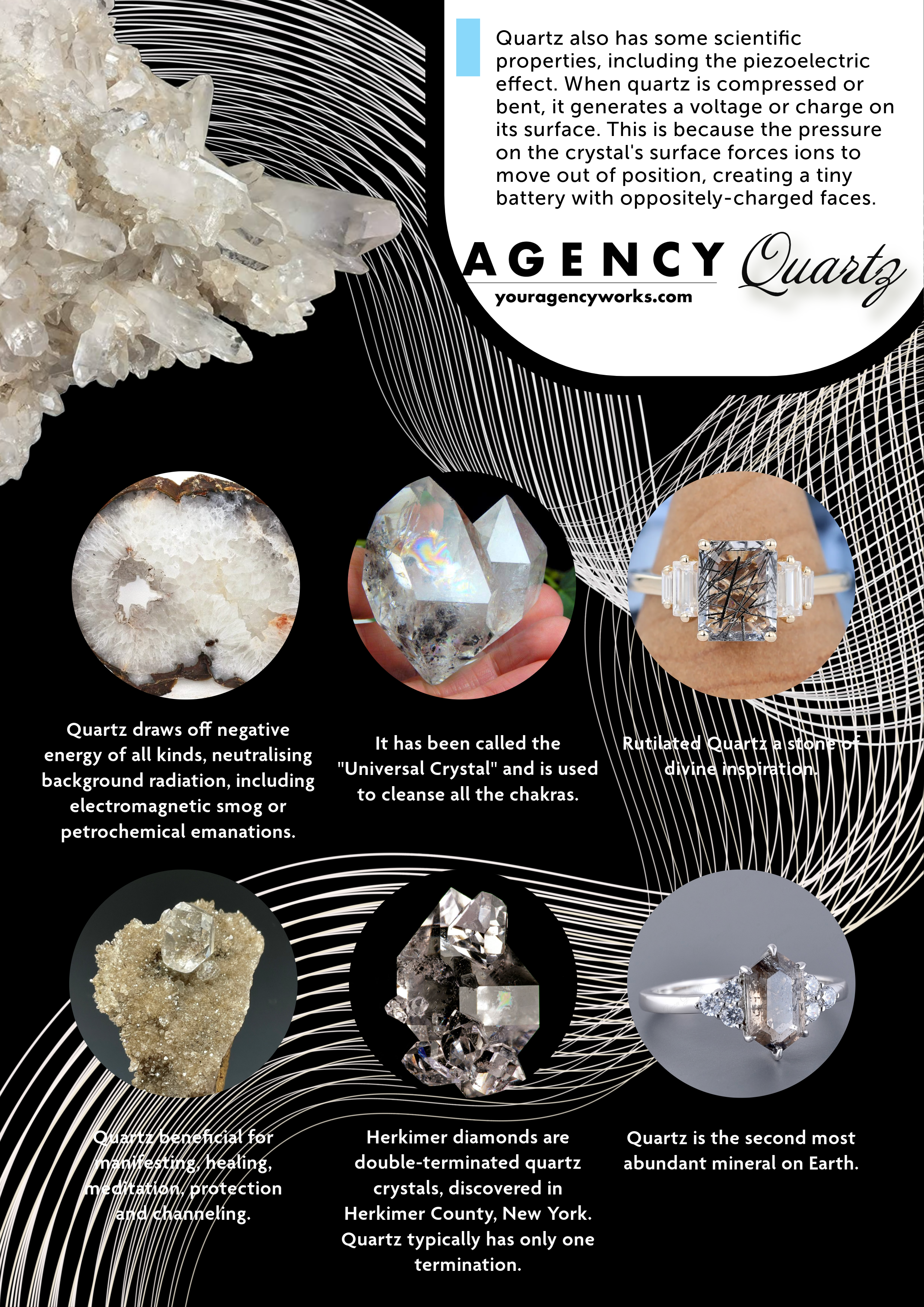
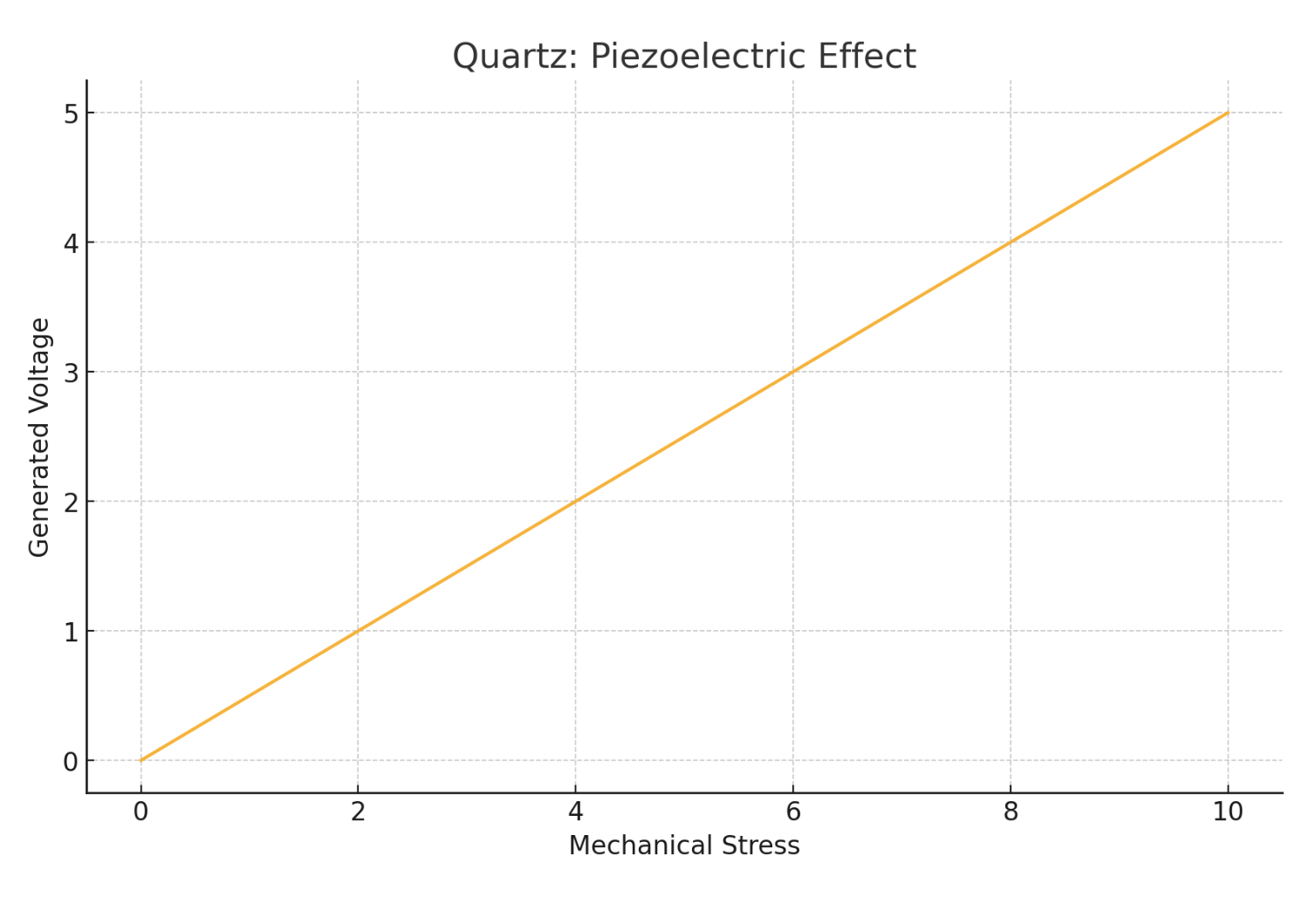
Quartz: Electromagnetic Symmetry and Timekeeping
Quartz (SiO₂), in its crystalline form, exhibits a trigonal lattice structure with a hexagonal habit. It is piezoelectric, meaning it can convert mechanical energy into electrical potential and vice versa. This occurs due to displacement of charge centers within the asymmetric unit cell under mechanical stress—an inherently relativistic behavior under Einstein’s theory of special relativity, where changes in energy states correspond to shifts in time and field interactions.
Quartz’s predictable lattice geometry allows for precise frequency oscillation, which is why it is used in oscillator circuits and atomic-scale timekeeping. These vibrations are invariant across inertial frames (a key postulate of special relativity), making quartz a highly reliable medium for timing in relativistic conditions. For example, GPS satellites, which require time dilation corrections, rely on such consistent oscillators on both orbital and ground systems to reconcile clock drift caused by gravitational and velocity-induced time dilation.
In optics, quartz is birefringent, meaning it refracts light into two rays. This property is used in polarizing microscopes and spectroscopy, as quartz interacts with electromagnetic waves in a stable, predictable manner. Light transmission through quartz is broad-spectrum, covering UV to infrared, due to its lack of internal defects and strong Si–O bonds, which do not readily absorb low-energy photons.
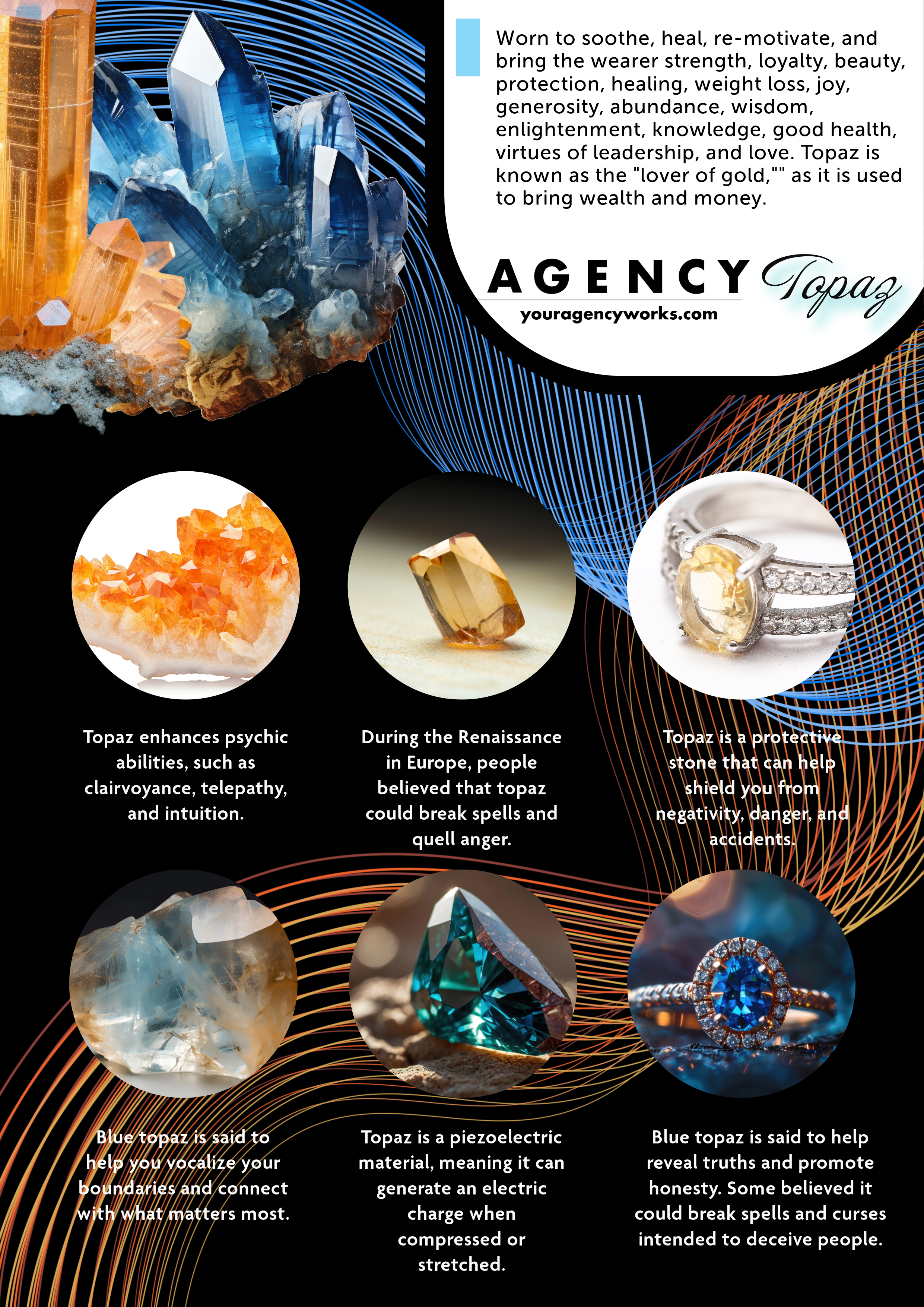
Topaz: Crystal Fields and Photon Interaction
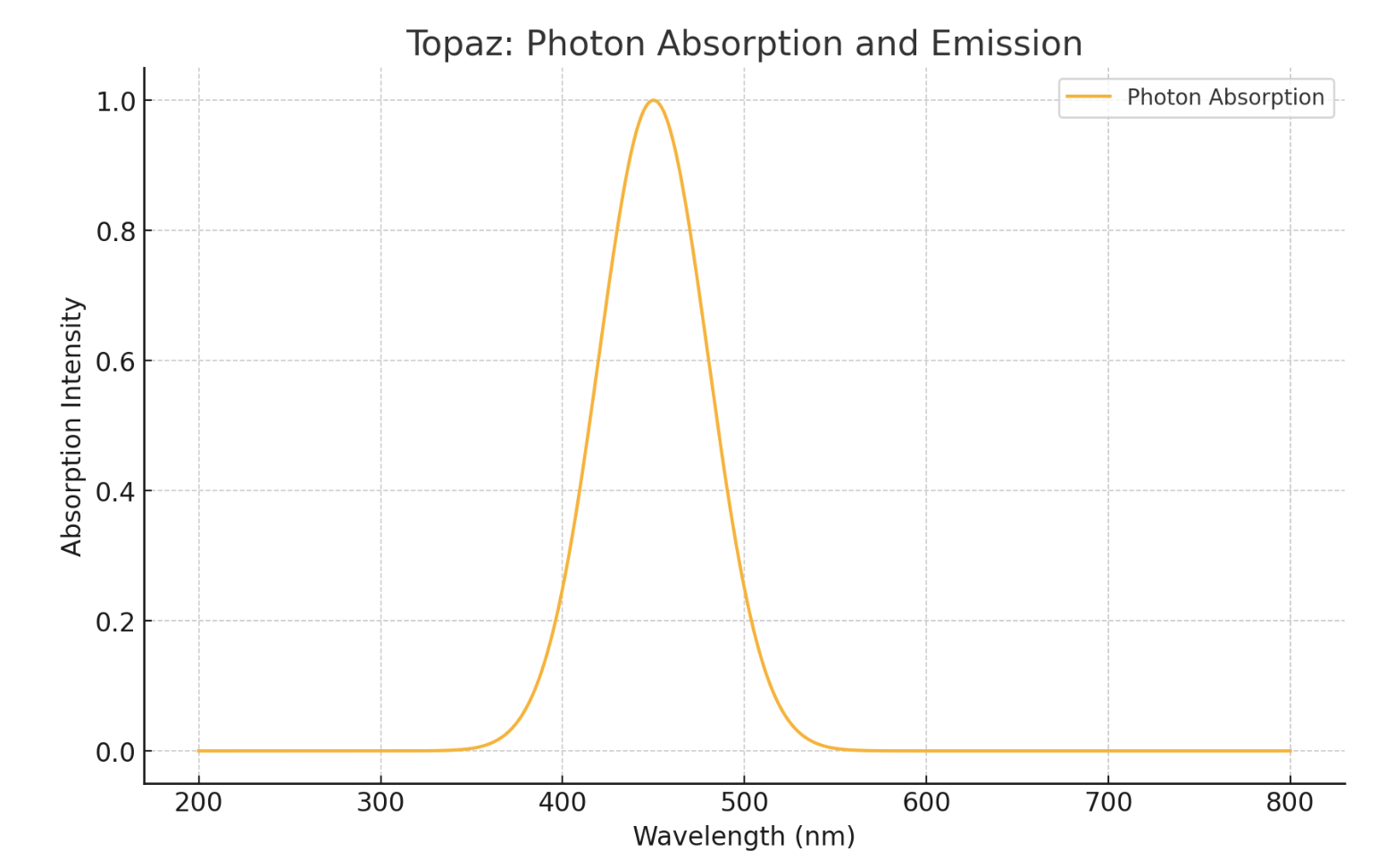
Topaz (Al₂SiO₄(F,OH)₂) crystallizes in the orthorhombic system and exhibits strong pleochroism—the ability to display different colors when viewed from different angles due to crystal field effects. From a relativistic standpoint, topaz demonstrates how atomic electron clouds shift under external electromagnetic influences, altering absorption spectra. These interactions are modeled using relativistic quantum field theory, particularly in how electron transitions absorb or emit photons.
Topaz has a relatively high refractive index (1.61–1.64), making it optically bright and internally reflective. Its brilliance stems from efficient photon momentum transfer within the crystal—a phenomenon modeled through the relativistic Doppler effect, where emitted or absorbed light changes frequency based on relative motion. Though imperceptible at human scale, the crystal’s structure allows for simulations of such effects in high-energy lab environments.
Furthermore, the color centers in irradiated topaz can be explained by relativistic quantum mechanics—where high-energy particles displace electrons in the lattice, creating metastable states that shift photon absorption. These transitions are central to understanding the interactions between high-frequency radiation and matter—core to fields like nuclear physics and photonics.
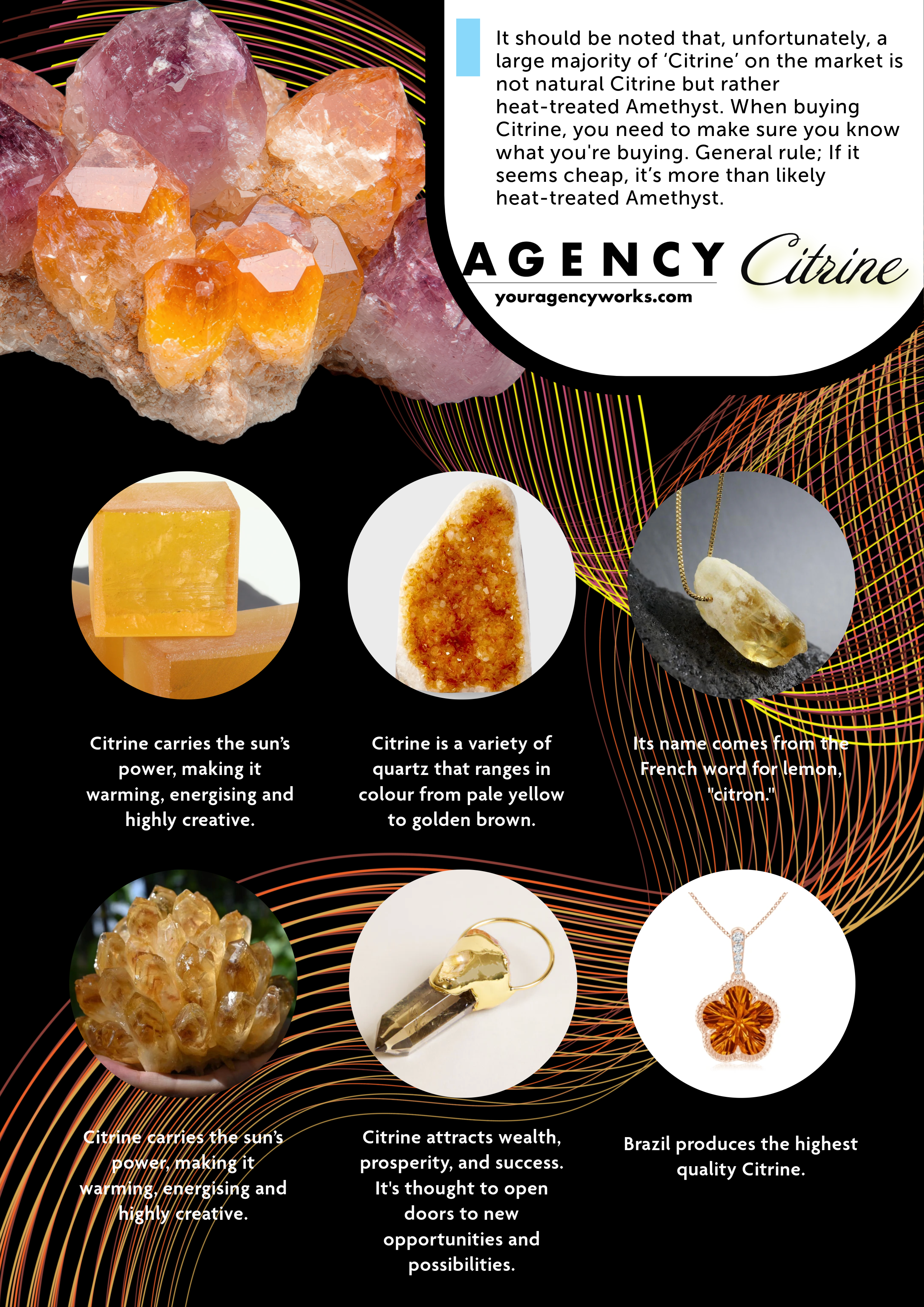
Citrine: Wavelength, Iron States, and Relativistic Color Perception
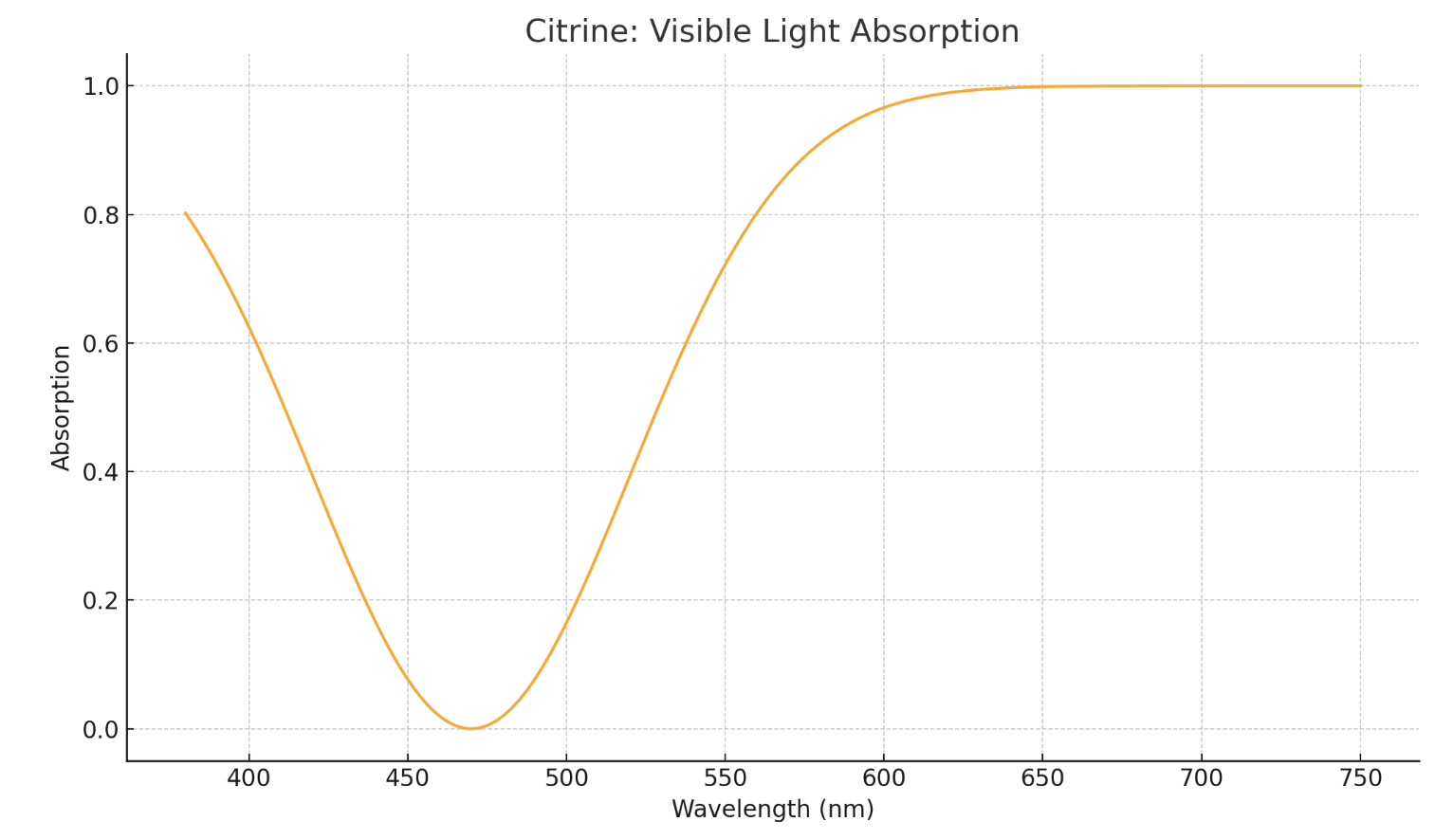
Citrine is a yellow variety of quartz, colored by ferric impurities (Fe³⁺). Iron, as a transition metal, affects the crystal’s electronic structure. These d-electron transitions absorb specific wavelengths of visible light, especially in the violet and blue spectrum (~400–490 nm), allowing yellow-orange light to dominate.
From a physics standpoint, the presence of iron alters the band structure of quartz, introducing allowed energy states that absorb particular photon energies. These transitions obey Einstein’s photon-energy relation E = hf, where h is Planck’s constant and f is the frequency of light. The absorption of specific frequencies—and their reflection or transmission—defines the perceived color.
Color perception, although a psychological construct, depends on relativistic interactions of light with matter. Under general relativity, gravitational redshift affects how light is perceived near massive objects, though this is negligible at crystal scale. However, the principle is useful in spectroscopy, where even minute shifts in absorption spectra are modeled using relativistic corrections to atomic energy levels.
Citrine, like all quartz, is also piezoelectric, meaning it can generate an electric field when compressed. This property is studied in condensed matter physics and is relevant to relativistic electrodynamics when dealing with wave propagation in anisotropic media. These principles govern the material’s behavior in complex electromagnetic environments, such as photonic crystals and piezoelectric sensors.
Where Light Meets Structure, and Thought Meets Field
In the interplay between crystal structures and cosmic principles, something unexpected begins to emerge: a pattern of coherence. Not just in the measured oscillations of quartz or the selective absorption in topaz, but in the way physical law mirrors symbolic interpretation. The rigid logic of crystal lattices, observable under a microscope and predictable through mathematics, shares a quiet rhythm with the intuitive ways humans have always sensed energy, meaning, and transformation.
Quartz, for example, vibrates in perfect precision, forming the invisible heartbeat of satellites, atomic clocks, and communication systems. And yet, for centuries before it was ever wired into a circuit, people placed it at the center of healing circles and rites of clarity. What modern science calls piezoelectricity—the charge generated under stress—was once felt as an inner charge, a resonance with environment or thought. This convergence is at the heart of what some now describe as lifestyle physics: a way of understanding how material systems influence, and are influenced by, daily human experience.
Topaz refracts light and responds to irradiation by shifting colors, showing how energy fields change matter. These are electromagnetic facts, governed by electron transitions and photon interactions, and yet they evoke a sense of design that feels both precise and personal. In this context, lifestyle physics offers a new lens—one where materials science becomes part of how we design spaces, moods, and even environmental systems.
Citrine, with its warm glow and iron-tinted signature, absorbs and reflects specific light frequencies that align closely with what human eyes interpret as comfort, vitality, and joy. The interaction between photons and ferric impurities inside the stone obeys Einstein’s photon-energy relationship (E = hf), revealing how matter is fundamentally shaped by light. Meanwhile, color and light have long been used to influence architecture, wellness, and emotional regulation. These intersections are no longer just aesthetic—they’re measurable. Lifestyle physics is the study of such intersections, inviting us to think about how light, form, and frequency shape both our bodies and the environments we inhabit.
As general and special relativity reshaped our understanding of time, light, and gravity, so too have the microstructures of crystals challenged us to consider the intelligence of form. If matter can hold memory, pulse in rhythm, or modify light—not just passively but interactively—then what else can materials teach us about the systems they inhabit?
The metaphysical interpretations, so often dismissed as unscientific, may actually function as early, qualitative models—human attempts to describe phenomena now measurable by spectroscopy and electrodynamics. This overlap isn’t a contradiction; it’s a reminder that language evolves with tools, and intuition may run parallel to discovery.
If lifestyle physics continues to gain ground, inviting us to treat materials not just as components but as collaborators—what new kinds of environments, therapies, or technologies might emerge? And more importantly, how might our own perception shift when we no longer separate the mechanical from the meaningful?
Let this be an invitation not to choose between science and metaphysics, but to explore the quantum seam where they may already be holding hands.

Cars as Particle Accelerator
A diesel engine operates as a compression-ignition system that converts chemical potential energy into mechanical and kinetic energy through a sequence of high-pressure, high-temperature, and plasma-like events. On multiple scales—from molecular to macroscopic—it behaves analogously to a particle accelerator. Click here for the PDF white paper.

Meringue Cloud Simulation
The mechanical whipping of egg whites introduces and suspends air bubbles within a protein matrix, visually and structurally resembling the formation of cumulus clouds through water vapor condensation on aerosols.

The Hunt, a soundtrack to the book
A book about my adventures with men, food, cars and life. This book is encoded with quantum positioning, to get the full experience make the recipes and go to the website to listen to the soundtrack. The experience? Better than a movie, a life story that will tell yours complete with food. Please enjoy the book while your destiny is written.

Meditative sounds
Advanced methodology on sound frequency training. Best practiced with a computer, two sound channels are required.