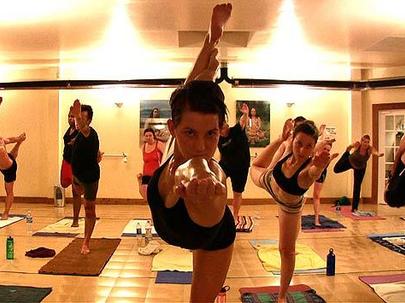
Consistency through poses changes everything. The same of the same is a great foundation. Have you ever noticed how some days you can power through a Bikram yoga class with ease, while other days every posture feels like a struggle? This phenomenon can be attributed to the fact that our day-to-day challenges can impact our experience of the same workout, even if the workout remains consistent.
For example, if we are dealing with stress or anxiety, our minds may be distracted and our bodies may feel tense. This can make it difficult to focus on the poses and perform them correctly, leading to a less effective practice. Similarly, if we are dealing with physical pain or discomfort, our bodies may not be able to perform at their full potential, leading to a less satisfying yoga experience.
On the other hand, when we are feeling energized, focused, and motivated, we may be able to push ourselves deeper into the postures and achieve greater flexibility and strength. Our mental state and physical well-being play a significant role in our experience of Bikram yoga, and can have a profound impact on our ability to progress in our practice and achieve our fitness goals.
However, it is important to remember that even if our day-to-day challenges impact our yoga experience, the practice itself remains the same. The same 26 postures will still be performed, the same muscles will be targeted, and the same benefits will be achieved. The difference lies in how we approach the practice and how our bodies respond to the stimuli.
One way to combat the impact of day-to-day challenges on our Bikram yoga practice is to practice mindfulness and focus on the present moment. By taking deep breaths, centering ourselves, and focusing on the movements and sensations of our bodies, we can better tune out distractions and improve our performance during a class.
It is also important to listen to our bodies and adjust our practice accordingly. If we are feeling particularly fatigued or are dealing with an injury, it may be necessary to take modifications or skip certain postures. By respecting our bodies and practicing with intention, we can still reap the benefits of a Bikram yoga practice even on days when our energy or focus is lacking.
If you have never done a workout day in and day out, your workouts are probably focused on very measurable metric like weight, time, speed, or watts. Yoga is very unique as it forces one to look inward, session after session for the metrics to keep going. Other sports provide a mind-muscle connection, yoga allows for spirituality in all forms to flow.
Below is an introduction to each pose, their benefits and where they block off blood flow in the body, the resting shavasnia being the maintained flow.
The practice is finished with the breath of fire. That is explanation is here.
Bikram Yoga is a popular style of yoga that consists of 26 postures, practiced in a room heated to 105 degrees Fahrenheit with 40% humidity. This practice is designed to provide a total body workout and promote physical and mental well-being. Let’s take a closer look at each posture in the sequence:
- Pranayama Breathing: This is a deep breathing exercise done at the beginning of the Bikram Yoga sequence. It helps calm the mind and prepare the body for the postures to come.
- Ardha Chandrasana (Half Moon Pose): This posture improves balance, strengthens the legs, and stretches the spine, abdomen, and chest. To perform this posture, stand with your feet together and raise your arms overhead. Exhale and lean to the right, stretching your left arm towards the ceiling and your right hand towards the floor. Hold for 30 seconds, then repeat on the other side. This posture creates a “blood dam” in the chest and abdomen, increasing blood flow to these areas.
- Utkatasana (Awkward Pose): This posture strengthens the thighs, hips, and calves while improving balance and coordination. To perform this posture, stand with your feet together and lower your body into a squat, keeping your knees together and your heels on the floor. Hold for 30 seconds, then stand up. This posture creates a “blood dam” in the lower body, increasing blood flow to the thighs and calves.
- Garurasana (Eagle Pose): This posture improves balance and flexibility in the legs and shoulders while also opening up the hips and upper back. To perform this posture, stand with your feet together and cross your right leg over your left. Wrap your right arm under your left arm and bring your palms together. Hold for 30 seconds, then repeat on the other side. This posture creates a “blood dam” in the shoulders and hips, increasing blood flow to these areas.
- Dandayamana-Janushirasana (Standing Head-to-Knee Pose): This posture improves flexibility in the hamstrings and hips while strengthening the core and improving balance. To perform this posture, stand with your feet together and lift your right leg, bringing your knee towards your chest. Grab your right foot with both hands and extend your leg forward, keeping your knee locked. Hold for 30 seconds, then repeat on the other side. This posture creates a “blood dam” in the abdomen, increasing blood flow to this area.
- Dandayamana-Dhanurasana (Standing Bow Pose): This posture improves balance, flexibility, and strength in the legs, back, and shoulders. To perform this posture, stand with your feet together and lift your right leg behind you. Reach back with your right hand and grab your right ankle, then extend your left arm forward. Hold for 30 seconds, then repeat on the other side. This posture creates a “blood dam” in the back and shoulders, increasing blood flow to these areas.
- Tuladandasana (Balancing Stick Pose): This posture improves balance, strength, and flexibility in the legs, arms, and back. To perform this posture, stand with your feet together and extend your arms above your head. Lean forward and lift your right leg behind you, keeping your arms and left leg parallel to the floor. Hold for 30 seconds, then repeat on the other side. This posture creates a “blood dam” in the back and arms, increasing blood flow to these areas.
- Dandayamana-Bibhaktapada-Paschimotthanasana (Standing Separate Leg Stretching Pose): This posture stretches the hamstrings, calves, and lower back while improving flexibility in the spine. To perform this posture, stand with your feet apart, about three feet wide. Exhale and fold forward, reaching for your toes. Hold for 30 seconds. This posture creates a “blood dam” in the legs and lower back, increasing blood flow to these areas.
- Trikanasana (Triangle Pose): This posture stretches the hips, hamstrings, and shoulders while improving balance and coordination. To perform this posture, stand with your feet apart, about three to four feet wide. Turn your right foot out 90 degrees and your left foot in slightly. Raise your arms parallel to the floor and stretch to the right, reaching for your right ankle with your right hand. Hold for 30 seconds, then repeat on the other side. This posture creates a “blood dam” in the hips and shoulders, increasing blood flow to these areas.
- Dandayamana-Bibhaktapada-Janushirasana (Standing Separate Leg Head-to-Knee Pose): This posture improves flexibility in the hamstrings, hips, and spine while strengthening the core. To perform this posture, stand with your feet apart, about three to four feet wide. Turn your left foot in slightly and lift your arms above your head. Exhale and lower your upper body to the right, reaching for your right foot with both hands. Hold for 30 seconds, then repeat on the other side. This posture creates a “blood dam” in the abdomen, increasing blood flow to this area.
- Tadasana (Tree Pose): This posture improves balance, stability, and posture while strengthening the legs and hips. To perform this posture, stand with your feet together and bring your hands together in front of your chest. Lift your right foot and place it on your left thigh, then press your palms together and hold for 30 seconds. Repeat on the other side. This posture creates a “blood dam” in the legs and hips, increasing blood flow to these areas.
- Padangustasana (Toe Stand Pose): This posture improves flexibility in the knees, ankles, and feet while strengthening the legs and improving balance. To perform this posture, stand with your feet together and lower your body into a squat. Place your palms on the floor and lift your heels, placing your toes on the floor. Hold for 30 seconds. This posture creates a “blood dam” in the lower body, increasing blood flow to the knees and feet.
- Savasana (Corpse Pose): This posture is done at the end of the Bikram Yoga sequence to relax the body and mind. Lie on your back with your arms by your sides and your palms facing up. Close your eyes and breathe deeply for five to ten minutes. This posture helps reduce stress and tension in the body.
- Pavanamuktasana (Wind Removing Pose): This posture improves digestion and relieves gas and bloating. To perform this posture, lie on your back and hug your knees to your chest. Hold for 30 seconds. This posture creates a “blood dam” in the abdomen, increasing blood flow to this area.
- Sit-Up: This posture strengthens the core and abdominal muscles. Lie on your back and sit up, reaching for your toes with your hands. Repeat for 10 to 15 sit-ups.
- Bhujangasana (Cobra Pose): This posture stretches the spine, chest, and shoulders while strengthening the back muscles. To perform this posture, lie on your stomach and place your palms on the floor next to your chest. Inhale and lift your upper body off the floor, keeping your elbows close to your body. Hold for 30 seconds. This posture creates a “blood dam” in the lower back, increasing blood flow to this area.
- Salabhasana (Locust Pose): This posture strengthens the back muscles while improving posture and reducing lower back pain. To perform this posture, lie on your stomach and place your arms by your sides with your palms facing up. Inhale and lift your legs, chest, and arms off the floor. Hold for 30 seconds. This posture creates a “blood dam” in the lower back, increasing blood flow to this area.
- Poorna-Salabhasana (Full Locust Pose): This posture strengthens the entire back, improves posture, and reduces lower back pain. To perform this posture, lie on your stomach and place your arms by your sides with your palms facing up. Inhale and lift your legs, chest, and arms off the floor. Interlace your fingers behind your back and straighten your arms. Hold for 30 seconds. This posture creates a “blood dam” in the lower back, increasing blood flow to this area.
- Dhanurasana (Bow Pose): This posture stretches the entire front of the body while strengthening the back muscles. To perform this posture, lie on your stomach and bend your knees. Reach back and hold onto your ankles. Inhale and lift your chest and legs off the floor, pulling your ankles towards your body. Hold for 30 seconds. This posture creates a “blood dam” in the abdomen and back, increasing blood flow to these areas.
- Supta-Vajrasana (Fixed Firm Pose): This posture stretches the thighs, knees, and ankles while improving digestion and reducing knee pain. To perform this posture, sit on your heels with your knees together and your hands by your sides. Lower your upper body to the floor and lie back, extending your arms above your head. Hold for 30 seconds. This posture creates a “blood dam” in the thighs and knees, increasing blood flow to these areas.
- Ardha-Kurmasana (Half Tortoise Pose): This posture stretches the spine, shoulders, and hips while reducing stress and anxiety. To perform this posture, sit on your heels with your knees together and your hands on your thighs. Inhale and lift your arms above your head, then exhale and fold forward, placing your forehead on the floor. Hold for 30 seconds. This posture creates a “blood dam” in the neck and shoulders, increasing blood flow to these areas.
- Ustrasana (Camel Pose): This posture improves posture, stretches the entire front of the body, and strengthens the back muscles. To perform this posture, kneel on the floor with your knees hip-width apart. Place your hands on your lower back and inhale, arching your back and lifting your chest. Hold for 30 seconds. This posture creates a “blood dam” in the lower back, increasing blood flow to this area.
- Sasangasana (Rabbit Pose): This posture stretches the spine, shoulders, and hips while improving digestion and reducing stress and anxiety. To perform this posture, kneel on the floor with your hands on your heels. Lower your forehead to the floor and reach back to hold onto your heels. Inhale and lift your hips towards the ceiling, pulling on your heels to stretch your spine. Hold for 30 seconds. This posture creates a “blood dam” in the neck and shoulders, increasing blood flow to these areas.
- Janushirasana with Paschimotthanasana (Head-to-Knee Pose with Stretching Pose): This posture combines two postures to stretch the entire back of the body while improving digestion and reducing stress and anxiety. To perform this posture, sit on the floor with your legs straight in front of you. Bend your right knee and bring the sole of your foot to the inside of your left thigh. Inhale and reach your arms above your head, then exhale and fold forward, reaching towards your left foot. Hold for 30 seconds, then repeat on the other side. This posture creates a “blood dam” in the abdomen, back, and legs, increasing blood flow to these areas.
- Ardha-Matsyendrasana (Spine-Twisting Pose): This posture improves spinal mobility, digestion, and reduces back pain. To perform this posture, sit on the floor with your legs straight in front of you. Bend your right knee and place your right foot on the outside of your left thigh. Inhale and lift your left arm, then exhale and twist to the right, placing your right hand behind you for support. Hold for 30 seconds, then repeat on the other side. This posture creates a “blood dam” in the abdomen and back, increasing blood flow to these areas.
- Savasana (Corpse Pose): This final posture allows the body to relax and release any tension while reducing stress and anxiety. To perform this posture, lie on your back with your arms by your sides and your legs straight. Close your eyes and breathe deeply, allowing your body to fully relax. Hold for 5-10 minutes. This posture allows blood to flow freely throughout the body, promoting overall relaxation and rejuvenation.
They don’t talk about how to add weight to the bar in Bikram – Blood Dams
Each time you practice the pose gets a little bit tighter or the hold a bit longer. I don’t like to say there is a correct way to do each one of these poses, but usually you can feel the correct way to do these poses. An instructor might come over and make an alignment, instantly you will discover where you can add the weight, where you can improve, and where you can get stronger. Balance in the body is a metric too!
The science behind these poses rests with in the idea of a blood dam. There are plently of sports and trainers that have picked up this practice. I’m not sure why you would add it in as a separate training, but Yoga is not for everyone…it should be. But its not. Blood dams are a common term used in the world of yoga, particularly in the Bikram yoga practice. A blood dam occurs when a muscle or group of muscles is contracted and held in a specific position for a period of time, which restricts blood flow to the area. This may sound counterintuitive at first, but in reality, blood dams can be incredibly beneficial for the body.
When a muscle is contracted and blood flow is restricted, the cells in the muscle tissue become starved of oxygen and other nutrients. This may sound like a negative thing, but it actually triggers a series of physiological responses that are beneficial for the body. The cells respond to this lack of oxygen and nutrients by producing more energy and becoming more efficient at using the available resources. This can lead to increased strength, endurance, and overall performance.
Additionally, blood dams can stimulate the body’s natural healing mechanisms. When blood flow is restored to an area that has been restricted, fresh blood and oxygen rush to the tissues, flushing out toxins and waste products and delivering nutrients that are essential for repair and recovery. This can lead to improved muscle function, reduced soreness, and faster recovery times after workouts.
Blood dams can also help to increase flexibility and range of motion. When a muscle is held in a contracted position, the fibers in the muscle tissue are stretched and lengthened. Over time, this can lead to increased flexibility and range of motion, making it easier to perform certain yoga poses and other physical activities.
Another benefit of blood dams is that they can help to improve circulation and cardiovascular health. When blood flow is restricted and then restored, the heart has to work harder to pump blood throughout the body. This increased workload can strengthen the heart and improve overall cardiovascular health, reducing the risk of heart disease and other related conditions.
While blood dams can be beneficial for the body, it is important to approach them with caution and under the guidance of a trained instructor. Holding a muscle in a contracted position for too long or using improper technique can lead to injury and other negative effects. It is important to listen to your body and know your limits, and to always seek guidance from a qualified instructor.
In conclusion, blood dams may sound like a negative thing, but they can actually be incredibly beneficial for the body. They can improve muscle function and performance, stimulate natural healing mechanisms, increase flexibility and range of motion, and improve circulation and cardiovascular health. When approached with caution and under the guidance of a qualified instructor, blood dams can be a valuable tool in any yoga or fitness practice.