Advanced Frequency Encoding
Advanced Frequency Encoding Playlists and more
When exposed to high temperatures and humidity levels, the body’s stress response is activated, causing a range of physiological changes that are similar to those experienced during exercise. These changes include the release of endorphins, increased heart rate, and improved circulation, all of which contribute to a reduction in stress levels.
Over time, regular sauna use has been shown to have a range of positive effects on the body and mind, including improved cardiovascular health, reduced inflammation, and improved mental health. These benefits can translate into long-term reductions in overall stress levels, as well as improved resilience to stressors in daily life.
While sauna use is not a replacement for other stress management strategies, it can be a powerful tool to add to your stress reduction toolkit. In this blog post, we will explore the science behind the body’s stress response to sauna use, as well as the long-term effects of regular sauna use on overall stress levels. We will also discuss best practices for incorporating sauna use into your daily routine and how to maximize the stress-reducing benefits of this ancient practice.
The Body’s Biological Reaction to Stress Caused by Sauna
Sauna is a popular practice for relaxation, rejuvenation, and overall well-being. The heat generated by saunas causes the body to sweat, promoting detoxification and relaxation. However, saunas also cause a biological stress response in the body, triggering a cascade of events that help the body cope with the stress. In this blog post, we will explore the body’s biological reaction to stress caused by sauna and how it can benefit our health.
Start: Heat Shock Response
As soon as we step into a sauna, our body temperature starts to rise, triggering a heat shock response. This response is the body’s natural defense mechanism against stress and involves the activation of heat shock proteins (HSPs). HSPs are responsible for repairing damaged proteins and preventing further damage caused by stress. They also play a role in the immune response and can help protect the body against infections and diseases.
Peak: Activation of the Sympathetic Nervous System
As our body temperature continues to rise, our sympathetic nervous system (SNS) is activated. The SNS is responsible for the fight or flight response and prepares the body to deal with stress. It increases heart rate, breathing rate, and blood pressure, redirecting blood flow to the muscles and away from non-essential organs. This response is essential for survival in dangerous situations but can also cause physiological symptoms such as sweating, trembling, and increased anxiety.
Cooldown: Parasympathetic Nervous System Activation
After spending some time in the sauna, our body temperature starts to decrease, and the parasympathetic nervous system (PNS) is activated. The PNS is responsible for the rest and digest response, promoting relaxation and healing in the body. It decreases heart rate, breathing rate, and blood pressure, redirecting blood flow to the digestive and reproductive systems. This response helps to counteract the effects of the SNS and promotes recovery and healing.
Benefits of Sauna-Induced Stress Response
The biological stress response triggered by sauna can have many benefits for our health. Here are some of the most notable ones:
The heat generated by saunas increases blood flow and oxygen delivery to the muscles, improving cardiovascular health. It also increases heart rate variability, which is a marker of cardiovascular health and resilience. Regular sauna use has been linked to a reduced risk of cardiovascular disease, stroke, and high blood pressure.
The activation of HSPs during the heat shock response can help boost the immune system’s function. HSPs play a role in antigen presentation, which is the process by which immune cells recognize and destroy pathogens. Regular sauna use has been linked to a reduced risk of respiratory infections, such as the common cold and flu.
The heat and relaxation provided by saunas can help reduce stress and promote relaxation. The activation of the PNS during the cooldown phase helps to counteract the effects of the SNS and promote relaxation and healing in the body. Regular sauna use has been linked to reduced stress, anxiety, and depression.
The heat generated by saunas can help relieve pain by promoting blood flow and oxygen delivery to the muscles. It also promotes the release of endorphins, which are natural painkillers produced by the body. Regular sauna use has been linked to reduced pain and stiffness in people with conditions such as arthritis and fibromyalgia.
Saunas cause a biological stress response in the body that triggers a cascade of events designed to help the body cope with stress. The heat shock response, SNS activation, and PNS activation all play a role in promoting cardiovascular health, enhancing immune function, reducing stress,
This study supports the claim that regular sauna use is linked to a reduced risk of cardiovascular disease.
This study provides evidence for the activation of the HSPs during the heat shock response and their role in promoting immune function.
This study supports the claim that regular sauna use can help reduce stress, anxiety, and depression.
This review article discusses the potential benefits and risks of sauna bathing, including the benefits on cardiovascular health and pain relief.
This study provides evidence for the activation of the SNS during sauna use and its role in preparing the body to deal with stress.
Saunas and steam rooms are both popular forms of heat therapy, but there are some key differences between the two. Saunas use dry heat generated by heated rocks, while steam rooms use moist heat created by boiling water to produce steam.
One of the main differences between the two is the level of humidity. Saunas have lower humidity levels than steam rooms, which can be beneficial for those who find high humidity uncomfortable or difficult to breathe in. On the other hand, the moist heat of a steam room can be more effective for people with respiratory issues or allergies, as it can help to clear the sinuses and airways.
Another difference is the temperature. Saunas are typically hotter than steam rooms, with temperatures ranging from 160°F to 200°F, while steam rooms usually have temperatures between 110°F to 120°F. The high temperature of a sauna can be too intense for some people, while the lower temperature of a steam room may be more comfortable for those who are sensitive to heat.
In terms of health benefits, both saunas and steam rooms have been shown to have positive effects on cardiovascular health, immune function, and stress levels. However, saunas may have a greater impact on improving circulation and detoxification, while steam rooms may be more effective for respiratory health and skin care.
Ultimately, the choice between a sauna and steam room comes down to personal preference and individual health needs. Some people may find the dry heat of a sauna more comfortable and effective, while others may prefer the humid heat of a steam room. Regardless of which one you choose, both can provide a relaxing and rejuvenating experience.
Pros | Sauna | Steam Room |
Promotes relaxation | X | X |
Relieves stress | X | X |
Improves blood circulation | X | X |
Helps with muscle recovery | X | X |
May reduce risk of illness | X | |
Aids in detoxification | X | X |
Enhances skin health | X | X |
May improve respiratory health | X | |
May improve cardiovascular health | X | |
Higher heat temperature | X | |
May be more traditional | X |
Cons | Sauna | Steam Room |
Can be too hot for some | X | |
May cause dehydration | X | |
May cause heat exhaustion | X | |
May exacerbate certain medical conditions | X | |
May cause skin irritation | X | X |
May not be as effective for respiratory health as steam room | X |
Saunas are becoming increasingly popular among fitness enthusiasts as they are believed to offer a wide range of benefits, including relaxation, detoxification, and improved athletic performance. However, one common question that arises is when is the best time to sauna – before or after a workout? In this article, we will explore the scientific evidence and offer some guidance on when to sauna for optimal results.
Working Out Before Sauna
Working out before sauna is a popular choice for many athletes, as it is believed to provide several benefits. One significant advantage is that exercising before sauna can help prepare the body for the heat and increase heat tolerance. According to a study published in the Journal of Science and Medicine in Sport, subjects who performed moderate-intensity cycling before sauna had a higher heat tolerance and lower heart rate response than those who did not exercise beforehand. This suggests that exercising before sauna can help your body adapt to the heat more quickly and effectively.
Another benefit of working out before sauna is that it can increase the release of endorphins. Endorphins are the body’s natural painkillers, and they can help reduce muscle soreness and fatigue after exercise. According to a study published in the Journal of Strength and Conditioning Research, sauna after exercise can help increase endorphin levels, leading to reduced muscle soreness.
Working Out After Sauna
Working out after sauna is also a popular choice, as it is believed to offer several benefits. One significant advantage is that sauna can help warm up your muscles and increase blood flow, which can help improve performance during exercise. According to a study published in the Journal of Athletic Training, subjects who underwent passive heating through sauna before exercise had increased muscle flexibility and power output, suggesting that sauna can have a positive impact on athletic performance.
Another benefit of working out after sauna is that it can help promote relaxation and reduce stress levels. According to a study published in the International Journal of Behavioral Medicine, sauna can help reduce stress and anxiety levels and promote feelings of relaxation and well-being. This can be especially beneficial after a tough workout or a stressful day.
Conclusion
Overall, whether to sauna before or after a workout depends on your specific goals and preferences. Working out before sauna can help increase heat tolerance and prepare the body for the heat, while working out after sauna can help improve athletic performance and promote relaxation. It is important to note that saunas can cause dehydration, and it is essential to drink plenty of water before and after sauna to avoid dehydration.
Sources:
Laukkanen, T., Kunutsor, S. K., Khan, H., Willeit, P., Zaccardi, F., & Laukkanen, J. A. (2018). Sauna bathing is inversely associated with dementia and Alzheimer’s disease in middle-aged Finnish men. Age and Ageing, 47(1), 111–114. https://doi.org/10.1093/ageing/afx203
Pilch, W., Szygula, Z., Klimek, A., & Palka, T. (2018). Influence of a single Finnish sauna session on white blood cell profile and cortisol levels in athletes and non-athletes. Journal of Human Kinetics, 63(1), 203–211. https://doi.org/10.2478/hukin-2018-0037
Scoon, G. S. M., Hopkins, W. G., Mayhew, S., & Cotter, J. D. (2007). Effect of post-exercise sauna bathing on the endurance performance of competitive male runners. Journal of Science and Medicine in Sport, 10(4), 259–262. https://doi.org/10.
If you’re a former hot yogi looking to transition to the sauna, there are a few things to keep in mind. Here’s a step-by-step guide to help you make the switch:
Consistency through poses changes everything. The same of the same is a great foundation. Have you ever noticed how some days you can power through a Bikram yoga class with ease, while other days every posture feels like a struggle? This phenomenon can be attributed to the fact that our day-to-day challenges can impact our experience of the same workout, even if the workout remains consistent.
For example, if we are dealing with stress or anxiety, our minds may be distracted and our bodies may feel tense. This can make it difficult to focus on the poses and perform them correctly, leading to a less effective practice. Similarly, if we are dealing with physical pain or discomfort, our bodies may not be able to perform at their full potential, leading to a less satisfying yoga experience.
On the other hand, when we are feeling energized, focused, and motivated, we may be able to push ourselves deeper into the postures and achieve greater flexibility and strength. Our mental state and physical well-being play a significant role in our experience of Bikram yoga, and can have a profound impact on our ability to progress in our practice and achieve our fitness goals.
However, it is important to remember that even if our day-to-day challenges impact our yoga experience, the practice itself remains the same. The same 26 postures will still be performed, the same muscles will be targeted, and the same benefits will be achieved. The difference lies in how we approach the practice and how our bodies respond to the stimuli.
One way to combat the impact of day-to-day challenges on our Bikram yoga practice is to practice mindfulness and focus on the present moment. By taking deep breaths, centering ourselves, and focusing on the movements and sensations of our bodies, we can better tune out distractions and improve our performance during a class.
It is also important to listen to our bodies and adjust our practice accordingly. If we are feeling particularly fatigued or are dealing with an injury, it may be necessary to take modifications or skip certain postures. By respecting our bodies and practicing with intention, we can still reap the benefits of a Bikram yoga practice even on days when our energy or focus is lacking.
If you have never done a workout day in and day out, your workouts are probably focused on very measurable metric like weight, time, speed, or watts. Yoga is very unique as it forces one to look inward, session after session for the metrics to keep going. Other sports provide a mind-muscle connection, yoga allows for spirituality in all forms to flow.
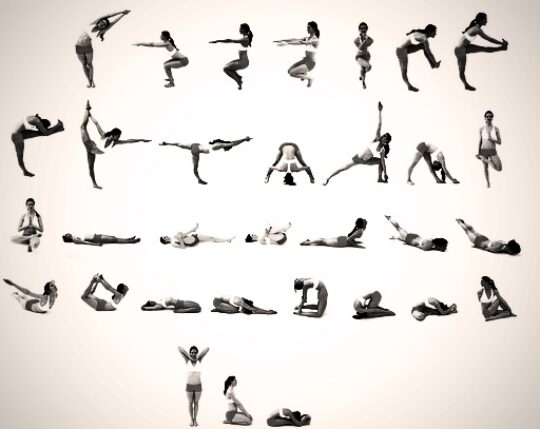
Below is an introduction to each pose, their benefits and where they block off blood flow in the body, the resting shavasnia being the maintained flow.
The practice is finished with the breath of fire. That is explanation is here.
Bikram Yoga is a popular style of yoga that consists of 26 postures, practiced in a room heated to 105 degrees Fahrenheit with 40% humidity. This practice is designed to provide a total body workout and promote physical and mental well-being. Let’s take a closer look at each posture in the sequence:
They don’t talk about how to add weight to the bar in Bikram – Blood Dams
Each time you practice the pose gets a little bit tighter or the hold a bit longer. I don’t like to say there is a correct way to do each one of these poses, but usually you can feel the correct way to do these poses. An instructor might come over and make an alignment, instantly you will discover where you can add the weight, where you can improve, and where you can get stronger. Balance in the body is a metric too!
The science behind these poses rests with in the idea of a blood dam. There are plently of sports and trainers that have picked up this practice. I’m not sure why you would add it in as a separate training, but Yoga is not for everyone…it should be. But its not. Blood dams are a common term used in the world of yoga, particularly in the Bikram yoga practice. A blood dam occurs when a muscle or group of muscles is contracted and held in a specific position for a period of time, which restricts blood flow to the area. This may sound counterintuitive at first, but in reality, blood dams can be incredibly beneficial for the body.
When a muscle is contracted and blood flow is restricted, the cells in the muscle tissue become starved of oxygen and other nutrients. This may sound like a negative thing, but it actually triggers a series of physiological responses that are beneficial for the body. The cells respond to this lack of oxygen and nutrients by producing more energy and becoming more efficient at using the available resources. This can lead to increased strength, endurance, and overall performance.
Additionally, blood dams can stimulate the body’s natural healing mechanisms. When blood flow is restored to an area that has been restricted, fresh blood and oxygen rush to the tissues, flushing out toxins and waste products and delivering nutrients that are essential for repair and recovery. This can lead to improved muscle function, reduced soreness, and faster recovery times after workouts.
Blood dams can also help to increase flexibility and range of motion. When a muscle is held in a contracted position, the fibers in the muscle tissue are stretched and lengthened. Over time, this can lead to increased flexibility and range of motion, making it easier to perform certain yoga poses and other physical activities.
Another benefit of blood dams is that they can help to improve circulation and cardiovascular health. When blood flow is restricted and then restored, the heart has to work harder to pump blood throughout the body. This increased workload can strengthen the heart and improve overall cardiovascular health, reducing the risk of heart disease and other related conditions.
While blood dams can be beneficial for the body, it is important to approach them with caution and under the guidance of a trained instructor. Holding a muscle in a contracted position for too long or using improper technique can lead to injury and other negative effects. It is important to listen to your body and know your limits, and to always seek guidance from a qualified instructor.
In conclusion, blood dams may sound like a negative thing, but they can actually be incredibly beneficial for the body. They can improve muscle function and performance, stimulate natural healing mechanisms, increase flexibility and range of motion, and improve circulation and cardiovascular health. When approached with caution and under the guidance of a qualified instructor, blood dams can be a valuable tool in any yoga or fitness practice.
Sauna people like it intense. People with small saunas always think they need a larger one before they can get intense. We sauna people underestimate low-impact workouts and small saunas. I know I did. Lots of people have access to a small sauna, maybe a two seater or just two small benches. We all have a body that can be moved in low impact ways. Let’s not take for granted either of these things. Enter the low impact do it anywhere workout.
Seated. Do it Seated.
The advantage of seated workouts is that they can be done almost anywhere. You don’t need a gym membership or any fancy equipment to get started. All you need is a comfortable chair and a few simple exercises to get your heart rate up and your muscles working. This makes seated workouts an excellent option for people who don’t have access to a gym or prefer to exercise at home.
Seated low-impact workouts are exercises that are performed while sitting down and are designed to increase your heart rate, improve your cardiovascular health, and strengthen your muscles without putting stress on your joints. These exercises are perfect for people who have limited mobility, are recovering from an injury, or want to add some variety to their workout routine. While seated workouts may not be as intense as high-impact exercises like running or jumping, they can still be just as important for maintaining your overall health and fitness.
One of the most significant benefits of seated low-impact workouts is that they are easy on your joints. If you have arthritis, a previous injury, or any other condition that makes high-impact exercises painful or difficult, seated workouts can provide an excellent alternative. Since these exercises are performed while sitting, they reduce the pressure on your knees, hips, and other joints. This can help reduce pain, stiffness, and inflammation, making it easier for you to move and exercise.
Seated workouts can also be customized to meet your specific needs and fitness level. If you’re just getting started with exercise, you can start with simple movements like marching in place or lifting your arms above your head. As you get stronger and more comfortable, you can gradually increase the intensity and complexity of your workouts. This can help you avoid plateaus and continue to see improvements in your strength, flexibility, and endurance.
Seated low-impact workouts can also have a positive impact on your mental health. Exercise is known to release endorphins, which are chemicals in your brain that can help improve your mood and reduce stress and anxiety. Seated workouts are no exception. Even though you’re not running or jumping, the physical activity can still provide a sense of accomplishment and improve your overall sense of well-being.
One of the best things about seated workouts is that they can be adapted to meet the needs of people of all ages and fitness levels. Whether you’re a beginner or an experienced athlete, there are seated exercises that can challenge you and help you achieve your fitness goals. These workouts can also be adjusted to accommodate any physical limitations you may have, so you can continue to exercise safely and effectively.
Below are some low impact seated moves you can work into your sauna! Anyone, even you with the two seater!
Remember to go at your own pace and stop if you experience any pain or discomfort. These exercises can be a great way to incorporate movement into your day, even if you’re sitting for long periods of time.
There are two areas of personal development where I have found joy within extremely difficult processes. In my personal fitness ritual of daily sauna and my professional culinary career.
I’m not sure if its because my system generally runs cold, but high temperature intense environments have had dramatic developmental effects.
Two characteristics are being called out as the strongest characteristics of success. These include joy in the process and grit or willingness to stick it out. When I started hot yoga in 2010, I had no idea how often I would do this again and again. That girl standing there in a hoodie and sweatpants. No mat, no towel, and no idea what she was up to. I made it 54 minutes in before I left the room. I returned to a towel, ice-cold water, and my instructor telling me to lay down. I was hooked on hot yoga and would be for the next 6 years. It was not easy. I went daily. I would talk myself into it outside the studio on the days I felt like shit. Eventually, it became about micromovements. I still had to talk myself into it a lot. But I was never cold on days I went to the studio, and my body wanted that.
As a pastry chef I can think of days in kitchens drenched in as much sweat as I come out of a sauna with. One of my first days I was making six gallons of boudino over a bain marie. My executive chef came over and put huge red bell peppers on each burner of the the entire stove surrounding me. I recall my northface climbing pants, already cuffed up for heat to escape, drenched, stuck to my body. It had to be at least 110 degrees in there. How ever, like the sauna I told myself it was all in a days work and that this particular batch of butterscotch budino was going to taste extra salty.
Using these former experiences of difficulty and triumph. I did it with that, how can I relate this to that. Daily sauna habit eventually became something that my body just looks forward to. I start packing up my day subconsciously. Mean while I say out loud “I’m going to the sauna.”
Ideation & Experience: Monaya MaGaurn
Written by Open AI
Training in natural cold water — whether a winter lake, river, or ice hole — is one of the most intense and rewarding forms of cold exposure. Unlike a shower or tub, you cannot control the temperature or environment. The water is raw, unpredictable, and often much colder. That’s why preparation, safety, and method are critical, especially for beginners.
Cold lakes and ice waters typically range between 32–50°F (0–10°C). At these temperatures, the body experiences an immediate “cold shock response”: rapid breathing, gasping, and increased heart rate. Even strong swimmers can panic or lose control in seconds. Beginners must approach this with respect, not bravado.
Never go alone. Always train with a partner who can help if something goes wrong.
Scout your entry point. Choose a gradual slope, dock ladder, or designated ice hole. Avoid areas with currents, unstable ice, or sharp rocks.
Limit time. Start with 30–60 seconds of immersion. Even seasoned practitioners rarely stay beyond 2–5 minutes.
Have recovery gear ready. Towels, warm dry clothing, a hat, and insulated footwear should be waiting by the shore.
Warm up lightly. Do squats, arm swings, or brisk walking to elevate core temperature before entry. Avoid sweating heavily.
Breathe before you enter. Take steady inhales and long exhales to calm your nervous system and reduce panic once submerged.
Wear minimal but safe clothing. A swimsuit is typical, though thin neoprene booties or gloves help protect extremities in extreme cold.
Move deliberately. Step in slowly and avoid diving or jumping, which can cause shock and disorientation.
Submerge to the shoulders. Full immersion maximizes adaptation, but beginners can stop at waist or chest depth.
Focus on the first 30 seconds. This is when the gasp reflex is strongest. Concentrate on slow exhales until breathing stabilizes.
Stay calm, not rigid. Relax shoulders, face, and jaw. Fighting the cold wastes energy.
Mind the time. Beginners should exit after 1 minute, even if they feel capable of more. Safety trumps bravado.
Optional light movement. Gentle arm or leg motions can help generate heat, but avoid overexertion.
Exit carefully. Muscles stiffen in cold water; use stable footing or a secure ladder.
Dry and dress immediately. Layer with warm, dry clothes, including socks and a hat.
Rewarm naturally. Use body movement (walking, air squats, push-ups) instead of rushing to a hot shower. This teaches your body to restore heat internally.
Start with 1–2 sessions per week. Over time, build up to 3–4 if recovery feels solid.
Focus on consistency, not duration. Regular, short exposures build more adaptation than occasional long ones.
Open water ice plunges demand respect. Unlike controlled environments, nature offers no adjustment dial. Beginners should prioritize safety, breathing, and gradual exposure, not extreme feats. With discipline and caution, lake or ice training builds unmatched resilience, mental clarity, and physiological adaptation that goes far beyond what a bathtub can provide.
The way the body responds to sauna is not the same for men and women, and this difference is one of the reasons I began saunaing in the first place. For women, the effects on hormones, sleep, and circulation are especially profound. When exposed to high heat, our blood vessels dilate to cool us down, but studies suggest that women often experience greater cardiovascular benefits from this process than men. Estrogen offers protective effects, women’s smaller vessels may be more responsive to temperature shifts, and the overall circulatory response can improve long-term heart health. Research has also shown that sauna influences circadian rhythms differently between genders: men may experience lowered melatonin levels and potential sleep disruption, while women often show increases in prolactin, which fosters relaxation and sleepiness. Similarly, heat exposure can reduce inflammation in both sexes, but women’s higher estrogen and progesterone levels appear to enhance these effects. These hormones also affect sweating—women sweat less, making overheating easier, but they also tolerate heat more effectively and reap benefits like improved bone density, reduced cardiovascular risk, and even relief from menopausal symptoms such as hot flashes and mood swings. Sauna sessions also modulate stress and bonding hormones: women see more pronounced rises in oxytocin and sharper drops in cortisol, translating into relaxation and resilience.
But the sauna is more than biology; it is a social space, and historically a male-dominated one. In some cultures women were excluded entirely, and echoes of that stigma remain. Many women still feel uneasy in mixed-gender saunas, sometimes pressured to maintain appearances or conceal themselves, while men may feel compelled to prove their toughness by enduring higher heat or staying longer. These pressures can create discomfort, anxiety, or awkwardness in confined spaces where intimacy, vulnerability, and unspoken power dynamics come into play. A sauna can feel like both magic and horror at once: strangers sharing silence, or conversations shaped by the altered, “drunk” sensation of heat. Navigating boundaries and being mindful of behavior in this heightened state is part of the experience. Respect is essential—everyone is there for different reasons, and those reasons sometimes clash.
Adding to the complexity is the way sauna and yoga have been marketed along gendered lines: sauna as a test of masculine endurance and camaraderie, yoga as a feminine pursuit of balance and peace. These stereotypes create barriers. Women may avoid saunas because of their masculine image, just as men may feel excluded from yoga or Pilates. The reality, of course, is that wellness practices benefit everyone. What matters is balance—building strength, but also flexibility; heat hardiness, but also rest and recovery. As I like to joke, if I’m going to be yolked, I also want to run, jump, and tumble like Bigfoot—Bigfoot does the splits, at least in my chewbacca onesie.
For women looking to start a sauna practice, the key is to approach it as you would any new habit. Start small—10 to 15 minutes at a comfortable temperature—and build gradually. Use visual cues or reminders to make it part of your routine, and link it with existing habits like post-workout showers or evening wind-downs. Track your sessions to notice patterns in how your body and mind respond. Bring small comforts like a towel, water bottle, or even a yoga mat if your sauna allows it. Supplements like magnesium can help with hydration, but water remains your best friend—before, during, and after. And don’t underestimate the social dimension. Conversations can make the minutes pass quickly, friendships can grow in the heat, and the support of others often helps you push beyond perceived limits.
Finally, a personal note. To the moms saying they don’t have time—book the sitter, leave the dishes, and give yourself this. I write this as a love letter, too: dear husband, I sit in the sauna not as escape, but as investment, so I can return to you and our family more whole. The bathtub is no match for the deep, detoxifying relief of heat. Let me roast, let me reset, and know that when I walk back through the door, sweaty and smiling, I’m carrying love as well as steam. Maybe next time you’ll join me.